As Schlam commits to decarbonise, we recognise this is not a goal we can achieve alone.
Speaking at a recent AusIMM Thought Leadership Series event, Schlam’s Director ESG and Corporate Affairs said while there are high expectations for the contribution companies will make to emissions reduction targets, the reality is that solutions come from working closely with suppliers and customers.
Quite simply, effective decarbonisation relies on greater collaboration.
Data collected over several years of annual greenhouse gas emissions assessments has established a strong understanding of all upstream and downstream sources of emissions in Schlam operations.
Meanwhile, our customers including mining companies and OEMs are increasingly seeking load and haul solutions that meet functional, financial and environmental criteria.
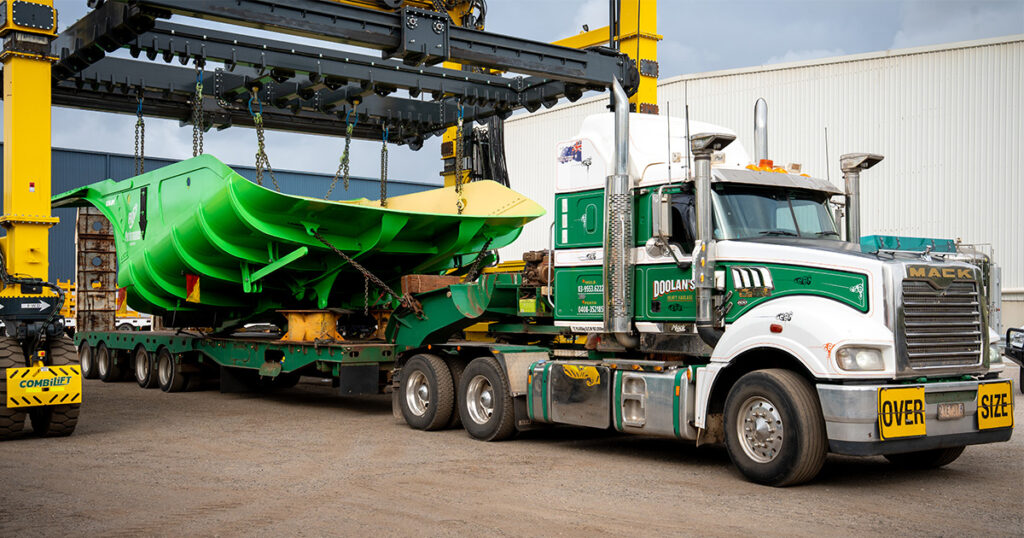
As a result, a major focus of our new ESG Roadmap is to embed low emissions solutions at each stage of the product lifecycle for Schlam Hercules Truck Beds and Barracuda Buckets.
The ultimate objective is to reduce the emissions intensity of our products from initial design and production to eventual recycling.
Carbon emissions reduction has always been a direct benefit of our lightweight haul truck beds and buckets. Up to 10% greater payload capacity means lower emissions per tonne moved.
As an example, we estimate that one Australian mining company operating a large fleet of Hercules Truck Beds is saving over 34,000 tCO2-e annually.
In addition, advanced engineering, wear monitoring and asset management services that prolong the products’ life help avoid emissions associated with turning over products more frequently.
The next step is to reduce the emissions embedded in the products themselves. This is where suppliers of key inputs play an important role.
Our ESG Roadmap prioritises energy efficiency and innovation. Lean manufacturing processes and greater use of renewable energy are part of this solution.
But the potential offered by green steel is perhaps where the greatest impact may be made. Steel is the primary raw material in Schlam products and accounts for 88% of our total carbon emissions. Currently available green steel can reduce the embedded emissions in a Hercules Truck Bed by 66%.
As more countries introduce carbon-based tariffs and the price of Australian Carbon Credit Units rises over time, every tonne can make a difference to costs.
Every tonne of carbon reduced is also good for the planet.
It’s an example of how productivity and sustainability objectives can be complementary.
For us, it’s a case of doing what’s right rather than what’s easy.
Together, we can find smarter ways to move material, extend equipment life, and reduce our collective footprint.
We’re ready to collaborate with our suppliers and customers to make this happen.